
Autumn Golf: Adjusting Your Strategy for Cooler Temperatures
There is nothing quite like autumn golf. The crisp morning air, the spectacular mosaic of changing leaves framing the fairways, and the distinct lack of mid-summer crowds make fall arguably the best time of the year to tee it up. But as any seasoned golfer knows, when the calendar flips to October and November, the golf course becomes an entirely different beast.
Cooler temperatures, softer fairways, morning dew, and unpredictable winds all conspire to steal distance and punish poor course management. If you take your mid-July strategy into a brisk October morning, you are going to find yourself coming up short on approach shots and struggling with your footing.
Whether you are a weekend warrior looking to break 90 or a low-handicap grinder preparing for a fall club championship, adjusting your strategy for cooler temperatures is non-negotiable. Let’s dive into the science, the gear, and the course management adjustments you need to master autumn golf.
The Physics of Cold Air: Why Your Ball is Flying Shorter
The most immediate and noticeable change during autumn golf is the sudden loss of distance. You step up to a 150-yard par 3, pull your trusty 8-iron, strike it pure, and watch it splash into the front bunker. What happened?
It’s not your swing; it’s science. Cold air is denser than warm air. As temperatures drop, air molecules huddle closer together, increasing aerodynamic drag on the golf ball. More drag means less carry, a lower apex, and a steeper descent angle.
The Golden Rule of Temperature: For every 10°F drop in temperature below 75°F, you can expect to lose approximately 2 yards of carry distance.
If you are playing in 45°F weather, you are dealing with a 30-degree difference from your summer rounds. That equates to roughly 6 to 8 yards of lost carry distance—nearly a full club. Combine that with bulky layers restricting your swing speed, and you might need to take two extra clubs on approach shots.
Dialing in Your Cold Weather Distances
Guessing your yardages in the fall is a recipe for bogeys. The best way to adjust is by hitting the range on a brisk morning and measuring your new carry distances. This is where personal launch monitors become invaluable.
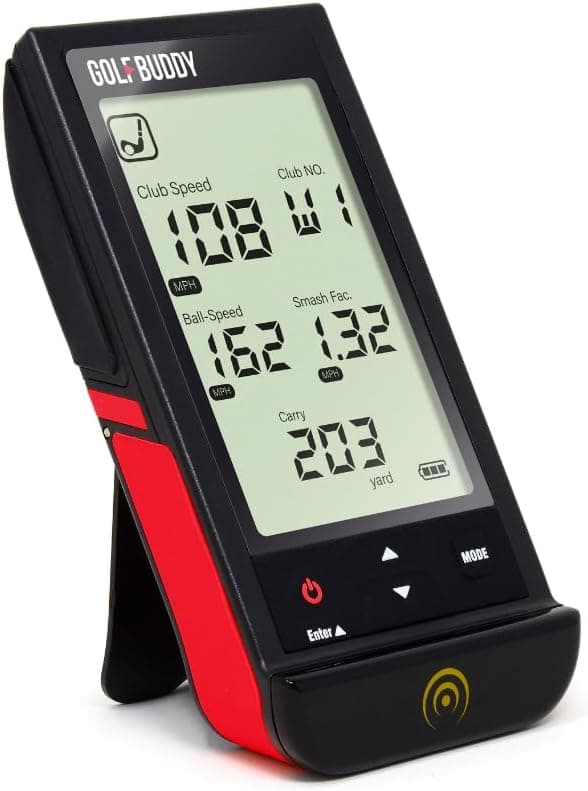
GOLFBUDDY Shot Mate Launch Monitor – Doppler Radar Golf Swing Analyzer
$179.99
Doppler Radar Accuracy: Advanced radar technology delivers precise swing and ball data including club speed, ball speed, smash factor, and carry distance Real-Time Performance Feedback: Instantly see your shot metrics to help improve consistency, distance control, and swing efficiency Full-Color TFT LCD Display: Bright, auto-adjusting screen provides clear visibility in all lighting conditions Practice & Target Modes: Train smarter with structured modes designed for repetition practice and accuracy-based target training Shot Storage Memory: Saves up to 1,000 shots and automatically stores the last 10 swings for quick review and comparison Portable & Compact Design: Lightweight build makes it easy to carry and use at the driving range or indoor practice areas Long Battery Life: Rechargeable lithium polymer battery provides up to 10 hours of continuous use
Using a device like the GOLFBUDDY Shot Mate Launch Monitor – Doppler Radar Golf Swing Analyzer allows you to map out your "autumn bag."
Pros of using a personal launch monitor in the fall:
- Gives you exact carry distances in the current weather conditions.
- Helps you measure whether your thicker clothing is actually reducing your clubhead speed.
- Compact enough to throw in your bag for a quick pre-round warm-up.
Cons:
- Requires hitting a decent volume of balls to get an accurate average, which can be tough on freezing mornings.
Ground Conditions: The End of the "Roll Out"
During the peak of summer, a 250-yard drive might carry 230 yards and roll out another 20 yards on firm, baked-out fairways. In the fall, however, morning dew, recent rains, and less sunlight lead to soft, spongey fairways.
When the ground is soft, you get zero roll. A 230-yard carry drive is going to yield exactly a 230-yard total drive.
Adapt Your Approach: Play the Carry
Because you cannot rely on roll, your course management must pivot exclusively to carry distances. You must know exactly how far you can fly the ball to clear front hazards, bunkers, or false fronts.
To execute this strategy flawlessly, a reliable laser rangefinder is a must-have tool.
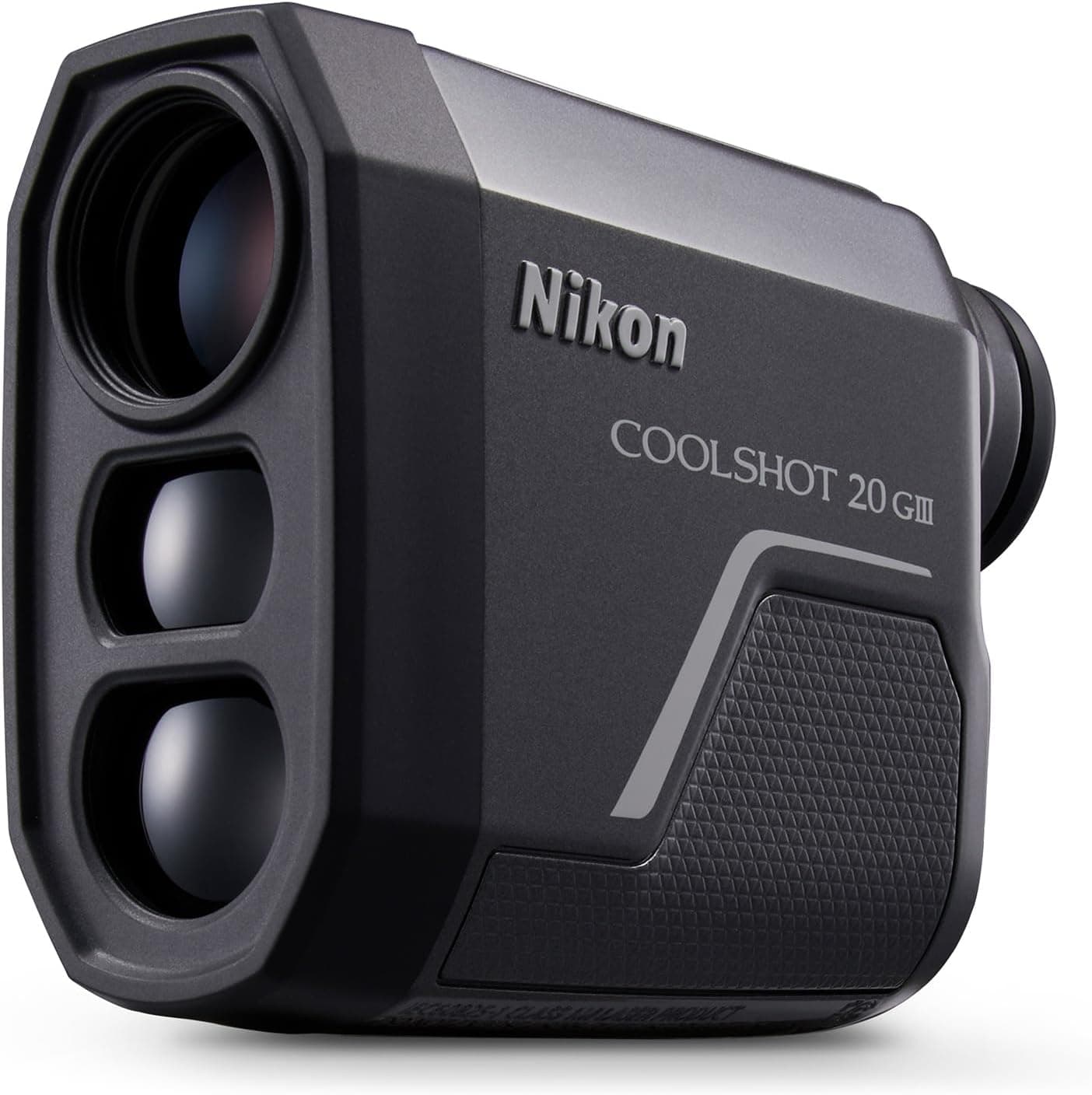
Nikon COOLSHOT Golf Laser Rangefinder 800-Yard
$146.95
PREMIUM NIKON OPTICS WITH 6X MAGNIFICATION - Features bright, high-contrast imaging through multilayer-coated lenses for maximum clarity on the fairway; 6x magnification and 20mm objective provide precise targeting of flagsticks, hazards, and course details, even under low light, cloudy skies, or variable weather conditions, ensuring confident shot planning and smooth gameplay FAST, ACCURATE RANGING PERFORMANCE - Measures distances up to 800 yards with impressive speed and consistency; One-touch ranging allows quick acquisition of flagsticks, bunkers, doglegs, or other obstacles, delivering real-time feedback to aid accurate club selection and shot strategy across diverse course layouts and challenging terrain LOCKED ON QUAKE AND FIRST TARGET PRIORITY - Confirms precise pin acquisition with a gentle vibration alert when locked on the flag; First Target Priority ensures readings focus on the closest object, minimizing interference from trees, hazards, or background objects and allowing golfers to maintain focus, confidence, and pace of play LIGHTWEIGHT, RAINPROOF CONSTRUCTION FOR ANY CONDITION - Ergonomic and compact at just 4.3 ounces, this rangefinder fits comfortably in one hand for extended rounds; rainproof housing and durable design protect internal components from moisture, fog, or humidity, while slip-resistant grip ensures secure handling even in wet or challenging environments STRAIGHT DISTANCE PRECISION FOR PURE ACCURACY - Displays exact line-of-sight distances without slope compensation for rule-compliant tournament play; Delivers consistent yardage measurements with Nikon's precision laser system in a simplified, fast-targeting configuration
We highly recommend the Nikon COOLSHOT Golf Laser Rangefinder 800-Yard for fall golf. Not only does it deliver ultra-fast, pinpoint accuracy to the flag, but its rainproof construction is perfect for misty autumn mornings or unexpected drizzles.
Navigating Greens: Aeration and Leaves
Autumn is also synonymous with two frustrating green conditions: aeration and fallen leaves.
- Aerated Greens: Most courses punch their greens in the fall to prepare them for winter dormancy. When putting on aerated greens, forget about trying to die the ball into the hole. The bumps will knock slow-moving putts completely off line. You need to putt with a more aggressive pace and take some of the break out of your read.
- The Leaf Rule: If you hit a ball down the middle of the fairway but it gets swallowed by a pile of leaves, play the agreed-upon "Leaf Rule" with your playing partners. Treat it as ground under repair (free drop) to keep the pace of play moving.
Footwear: Your First Line of Defense
If your feet are wet and cold by the third hole, your round is effectively ruined. The heavy morning dew of October can soak through a cheap pair of summer mesh shoes in minutes. Furthermore, fallen leaves create incredibly slippery conditions on tee boxes and sidehill lies.
Switching to a waterproof, high-traction shoe is arguably the most important gear change you can make for the season.
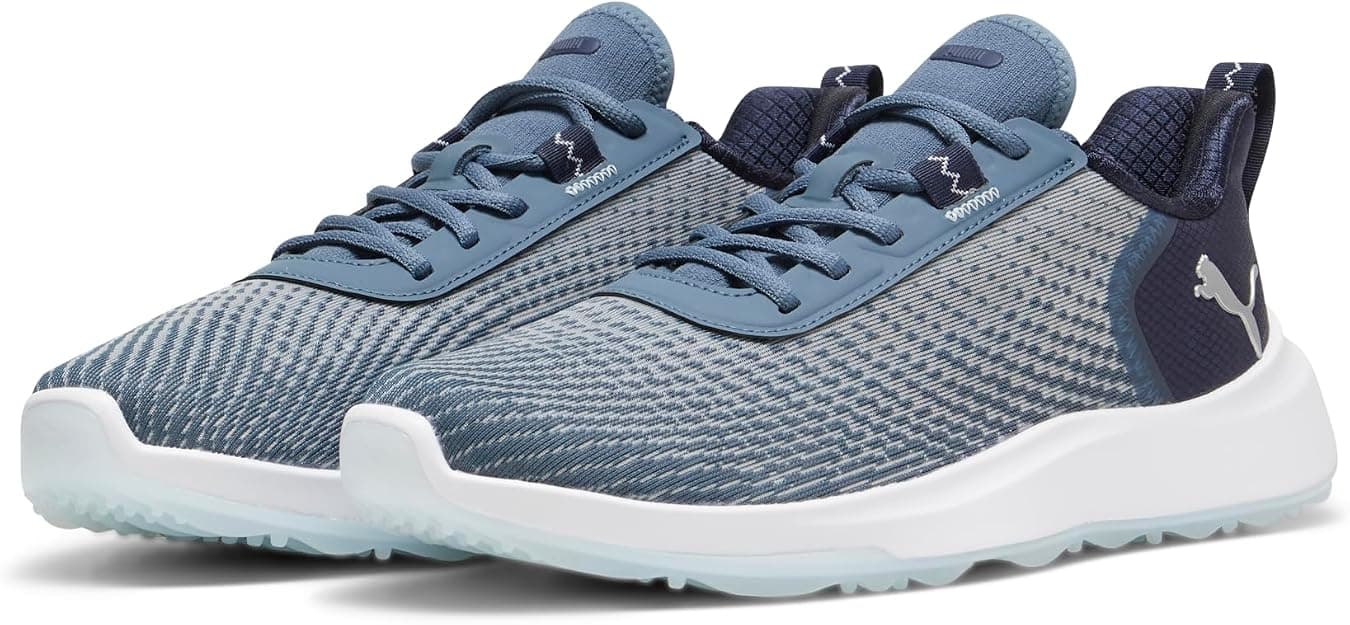
Puma Men's Fusion Crush Sport Golf Shoe
$49.99
ALL-DAY COMFORT: Full-length FUSIONFOAM with soft EVA and responsive rubber cushioning keeps you energized. These men's golf shoes deliver lasting comfort through long rounds on the course. STAY DRY, PLAY HARD: Waterproof mesh upper keeps feet dry in any weather. Designed as spikeless golf shoes for men, they let you focus on your swing without worrying about soggy socks. SUPERIOR TRACTION: Dual-zone spikeless outsole made from durable rubber grips every surface. These mens golf shoes spikeless give stability and confidence for smooth, controlled swings. BREATHABLE SUPPORT: Engineered mesh with breathable membrane lets heat out while keeping elements away. Stay fresh and focused in these breathable golf shoes designed for long play. EASY ENTRY FIT: EVERSTRETCH bootie construction makes slipping into your golf sneakers men effortless. The snug fit supports movement, blending style and performance on and off the course.
The Puma Men's Fusion Crush Sport Golf Shoe is an exceptional choice for transitional weather.
Why we love it for Autumn:
- Waterproof Mesh: It features a waterproof membrane that keeps the morning dew out while remaining breathable enough for when the afternoon sun finally breaks through.
- Exceptional Traction: The dual-zone spikeless outsole provides stability on wet grass and damp pine needles, ensuring you don't slip during a heavy swing.
- All-Day Comfort: The FUSIONFOAM cushioning saves your joints when the ground starts to harden up late in the season.
The Golf Ball Dilemma: Should You Switch?
There is a long-standing debate in the golf community: Should you switch to a softer compression golf ball in the winter?
The theory makes sense. Golf balls become harder in cold weather, and standard high-compression tour balls can feel like hitting literal rocks. A lower compression ball will compress easier at slower (cold weather) swing speeds, theoretically offering better feel and distance.
However, modern golf ball technology has advanced significantly. While switching to a softer ball might feel better off the clubface, the distance gains are minimal.
The better strategy: Keep your golf balls warm. Keep two golf balls in your pocket alongside a hand warmer. Play one on the first hole, and swap it for the warm one in your pocket on the next tee. A warm golf ball flies significantly further than a cold one, regardless of its compression rating.
Layering Like a Pro
Your apparel strategy in the fall needs to balance warmth with mobility. The "Michelin Man" look might keep you warm, but it will decimate your shoulder turn, leading to massive blocks and slices.
Follow the Three-Layer System:
- Base Layer: A moisture-wicking, long-sleeve compression shirt. It retains body heat without adding bulk.
- Mid-Layer: A lightweight fleece, quarter-zip pullover, or wool sweater. This provides insulation.
- Outer Layer: A thin, wind-proof and water-resistant vest or jacket. A vest is often preferred by tour pros because it keeps the core warm while leaving the arms completely free to swing.
Summer vs. Autumn Golf Adjustments: A Quick Guide
To summarize the necessary strategic shifts, here is a quick reference table to keep in mind before your next fall tee time:
| Strategy Element | Peak Summer Golf | Crisp Autumn Golf |
|---|---|---|
| Club Selection | Standard yardages apply. | Take 1 to 2 extra clubs on approaches. |
| Fairway Play | Expect massive roll-out. | Plan for zero roll; play exact carry yardages. |
| Apparel | Polos and breathable shorts. | Layering system; focus on core warmth & vests. |
| Footwear | Breathable, lightweight shoes. | Waterproof shoes with aggressive traction. |
| Putting Pace | Match speed to green stimp. | Putt aggressively through aeration holes & dew. |
| Golf Ball Mgt. | Leave bag in the trunk. | Store balls inside overnight; keep in warm pockets. |
Final Thoughts
Autumn golf is a test of patience, adaptability, and preparation. By understanding how cold, dense air affects your ball flight, investing in waterproof gear to protect against the elements, and utilizing tools like rangefinders and launch monitors to dial in your new yardages, you can extend your season and keep shooting low scores right up until the snow falls.
Embrace the chill, club up, and enjoy the most beautiful time of the year on the golf course.
BirdieFinder.Golf is a participant in the Amazon Services LLC Associates Program, an affiliate advertising program designed to provide a means for sites to earn advertising fees by advertising and linking to Amazon.com.